Is Your Breaker Panel Too Small? Signs in Chesapeake Homes
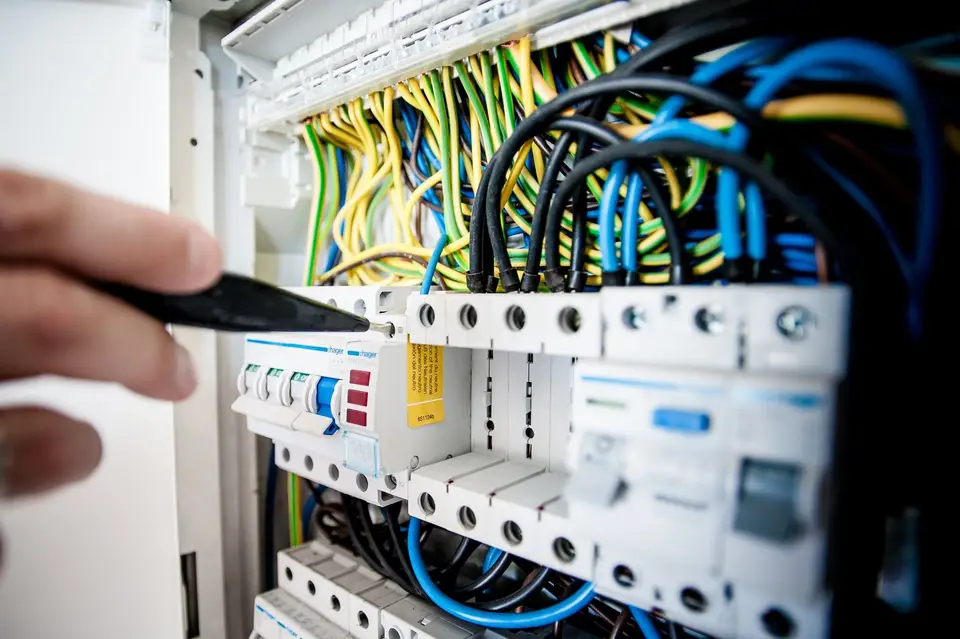
A breaker panel too small for the house is one of the most common reasons we get called out in Chesapeake. The houses here keep growing. A sunroom goes on the back, the old furnace becomes a heat pump, a hot tub lands on the deck and an electric car arrives in the garage. Each one draws from the same panel, which was sized for the house as it was first built. This guide covers the signs that a panel has reached its limit, what a load calculation tells you and when a new panel is the right answer.
What the panel actually does
The panel takes the power that comes in from the street and splits it into circuits, each protected by a breaker. Two numbers matter. The first is the service size, the total the panel and the line from the street can carry. The second is the number of slots, the spaces for breakers. A panel can run out of either one. A house with plenty of service but no free slots needs a different fix from a house with free slots and a service that is already running near its limit.
Signs your panel is near its limit
Some signs are easy to spot, and some need a closer look.
- Breakers that trip when two big things run together. The dryer and the oven, or the air conditioner and the microwave, take a breaker out.
- Lights that dim when something starts. A short dip when the heat pump kicks on is normal, but a deep or long one points to a strained service or a loose connection.
- Every slot is full. Breakers are doubled up in single slots, or there are thin “tandem” breakers squeezed in to make room.
- Extension cords that never move. Power strips daisy-chained across a room are often a sign there were never enough circuits.
- A warm or buzzing panel. Heat or noise at the panel always deserves a call.
Why Chesapeake houses fill up
Many Chesapeake subdivisions in Great Bridge, Greenbrier and Western Branch were built with panels that were fine for the house as it was. Over the years, owners have added what the city’s larger lots make room for. A workshop in the detached garage, a pool pump, a second refrigerator, lights across the yard and, more and more, a Level 2 charger for an electric car.
Heat pumps are the other big change. Swapping a gas furnace for a heat pump moves the heating load onto the panel, and the backup heat strips in many heat pumps draw a lot on the coldest mornings. Add an EV charger running overnight, and a panel that was comfortable a few years ago can find itself running close to its limit on a January night.
The load calculation comes first
Before anyone recommends a new panel, the answer should come from a load calculation. The electrician adds up what the house draws from its heating and cooling, cooking, water heating, laundry and everything else, and then adds what you plan to put in. The result shows whether the service can carry it.
The answer is not always a new panel. Sometimes the service has plenty of room and only the slots are full, and a few circuits can be combined or a subpanel added. Sometimes a load management device can share power between the EV charger and the dryer so they never run at full draw together. And sometimes the service really is too small, and a larger panel and service are the right fix. You should see the numbers either way.
When a new panel makes sense
A new panel is usually the right call in a few situations.
- The load calculation shows the service is too small for what the house uses now or what you plan to add.
- The panel is a brand inspectors and insurers flag, or it shows rust, scorching or breakers that no longer hold.
- There is no room left and no sensible way to make room, even with a subpanel.
- You are planning several big loads at once, such as a charger, a heat pump and an addition, and want to do the work once.
What the upgrade involves
A panel upgrade in Chesapeake needs a permit from the city and, if the service size changes, a visit from the power company to disconnect and reconnect the line. On the day of the swap, the power is off for part of the day. The old panel comes out, the new one goes in, each circuit is moved across and labeled, and protection that the code now asks for is added where it applies. Then every circuit is tested and the inspection is booked.
While the panel is open, it is the simplest time to add a whole-house surge protector, and the right time to leave room for a generator transfer switch if storm outages are a worry where you live.
Planning ahead saves paying twice
The most expensive way to upgrade a panel is twice. If you know a charger, a heat pump or an addition is coming in the next few years, say so at the estimate. Sizing the panel for all of it now usually costs little more than sizing it for today. Our panel upgrades page explains how we price the work, and our Chesapeake page covers the other jobs we do across the city. If your breakers are already tripping, book a free estimate and we will run the numbers with you.
Questions about this guide
Is it safe to keep resetting a breaker that trips?
Once, after you unplug something, is fine. If it trips again straight away or trips every day, stop resetting it and have the circuit checked. The breaker is doing its job, and the cause is still there.
Can I add a subpanel instead of replacing the main panel?
Sometimes. A subpanel adds slots for new circuits, but it doesn't add power. If the load calculation shows the service has room and only the slots are full, a subpanel can work. If the service itself is near its limit, a subpanel just moves the problem.
How do I know what size my panel is?
The main breaker at the top of the panel is usually marked with its amp rating. The label inside the door also lists the panel's rating. If you can't find either, we check it at the estimate.